
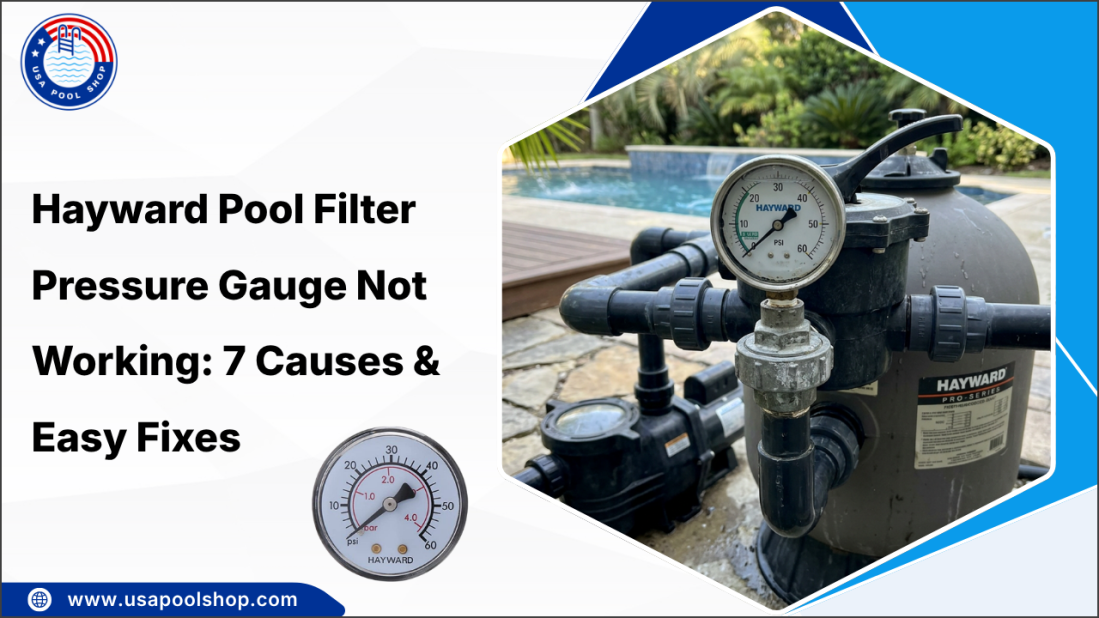
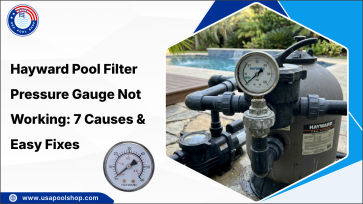
A Hayward pool filter pressure gauge provides a quick way to monitor pressure inside the filtration system. When the pump is running, the gauge should respond to the pressure produced as water moves through the filter. A reading that stays at zero, remains stuck at one number, fluctuates unexpectedly, or suddenly becomes much higher or lower than normal can indicate a problem that needs attention.
A Hayward pool filter pressure gauge not working does not always mean the gauge itself has failed. A blocked pressure port, dirty filter, trapped air, circulation problem, damaged connection, or incorrect replacement gauge can produce similar symptoms. Identifying the actual cause helps prevent unnecessary part replacement and makes it easier to restore normal filtration.
This guide covers seven common causes, simple checks and fixes, and the steps for replacing a faulty Hayward pool filter pressure gauge.
How to Tell If a Hayward Pool Filter Pressure Gauge Is Not Working
A pressure gauge should respond when the pool pump starts and provide a reasonably stable reading while the filtration system operates normally. Several symptoms can help determine whether the gauge itself needs attention.
Gauge Stays at 0 PSI
If the pump is running and water is circulating but the gauge remains at zero, the gauge may not be receiving pressure. A blocked pressure gauge port is one possible cause. If the pressure passage is clear and the rest of the filtration system is operating normally, the gauge itself may have failed.
Needle Does Not Move
A working gauge should react when system pressure changes. If the needle stays in exactly the same position when the pump starts or stops, the gauge may be stuck or unable to sense pressure. Compare the gauge position with the pump's operating status. A needle that never responds deserves further inspection.
Gauge Shows an Unusually High Reading
A high reading does not automatically mean the gauge is defective. A dirty or restricted filter can create genuine high pressure because water has more resistance as it passes through the filter. If the pressure has increased gradually as the filter has become dirty, inspect the filter before replacing the gauge.
Reading Is Lower Than Normal
A lower-than-usual pressure reading can be associated with reduced water flow, pump problems, air entering the system, or other circulation issues. If water flow is also weaker than normal, investigate the circulation system rather than assuming the gauge has failed.
Reading Fluctuates
A pressure reading that changes slightly during operation may be normal in some situations, but significant or unexplained fluctuations can indicate trapped air, circulation problems, or a gauge connection issue. Compare the reading with the filter's normal operating pressure to determine whether the change is actually abnormal.
Gauge Is Physically Damaged
A cracked lens, damaged housing, corrosion, moisture inside the gauge, or a bent or loose needle can indicate physical failure. Visible damaged gauges should be replaced rather than relied upon for monitoring filter pressure.
Shop at USAPoolShop for quality Hayward pressure gauges and pool equipment replacement parts designed to support accurate monitoring and reliable filtration performance. Explore Hayward filter gauges, pressure gauge fittings, filter components, valves, and other replacement parts that help maintain proper operation, simplify repairs, and keep your pool and spa equipment running efficiently.
7 Common Causes of a Hayward Pool Filter Pressure Gauge Not Working
Before replacing the gauge, check the surrounding filter and circulation system. The following seven causes cover the most common reasons a Hayward pressure gauge may provide no reading or an inaccurate reading.
Cause | What You May Notice | Practical Fix |
1. Clogged pressure gauge port | The gauge stays at 0 PSI or responds slowly. | Shut down and depressurise the system, then clean the pressure passage. |
2. Faulty or damaged gauge | The needle is stuck, inaccurate, or does not respond. | Replace the gauge with a compatible Hayward part. |
3. Dirty or restricted filter | Pressure is consistently higher than the normal reading. | Clean, backwash, or service the filter according to its design. |
4. Trapped air in the system | Pressure fluctuates, or circulation is inconsistent. | Identify the source of air and follow the proper air-release procedure. |
5. Pump or circulation problem | Low pressure and weak or abnormal water flow | Inspect pump operation, water supply, and circulation path. |
6. Loose or damaged gauge connection | Leaks or inconsistent gauge readings around the fitting | Inspect the connection and replace damaged sealing or connection components. |
7. Incorrect replacement gauge | The gauge does not fit correctly or gives an unsuitable reading. | Match the replacement gauge to the specific Hayward filter and specifications. |
Learn how to install and maintain Hayward De Pool Filters for pools to keep your filtration system performing efficiently and extend its service life.
Easy Fixes for a Hayward Pool Filter Pressure Gauge
Once the likely cause has been identified, the appropriate fix may be relatively simple. Always turn off the pump and release system pressure before removing or servicing the gauge.
Clean the Pressure Port
If the gauge stays at zero despite normal pump operation, inspect the pressure passage for debris or buildup. A restricted passage can prevent system pressure from reaching the gauge.
Carefully clean the passage without damaging the fitting. Reinstall the gauge and test the system after pressure has been safely restored.
Check the Filter Condition
If the gauge is showing high pressure, inspect the filter before replacing the gauge. A dirty filter can create a real pressure increase.
Clean or service the filter using the procedure appropriate for its design. After restarting the system, observe whether the pressure returns closer to its normal operating level.
Inspect the Gauge Connection
Check the gauge fitting for leaks, damage, or signs of a poor seal. Inspect the threads and relevant sealing components while the system is depressurised.
If the connection is damaged, replace the affected component rather than repeatedly tightening the fitting.
Check for Trapped Air
If the gauge fluctuates or circulation is inconsistent, inspect the system for signs of trapped air. Look for possible air-entry points and follow the manufacturer's procedure for releasing air from the filter system.
Check Pump and Water Flow
A low pressure reading accompanied by weak water circulation can point to a pump or flow problem rather than a faulty gauge.
Confirm that the pump is operating correctly and that water is moving through the system as expected.
Replace the Gauge if It Has Failed
If the pressure port is clear, the filter and pump are operating normally, and the gauge remains stuck or inaccurate, replacing the gauge is usually the appropriate fix.
Select a replacement compatible with the specific Hayward filter rather than choosing one based only on appearance.
Discover Top-Quality Hayward Pool Parts at USAPoolShop to find reliable replacements that keep your pool equipment running smoothly.
How to Replace a Hayward Pool Filter Pressure Gauge
Replacing a pressure gauge is straightforward when the system is safely shut down and depressurised. Follow these steps to avoid working on a pressurised filter.
1. Turn Off the Pool Pump
Switch off the pump before touching the pressure gauge. Make sure the pump cannot restart while the gauge is being removed.
2. Release System Pressure
Follow the filter manufacturer's pressure-relief procedure. Confirm that pressure has been released before loosening the existing gauge.
Never remove a gauge from a pressurised pool filter.
3. Remove the Old Gauge
Carefully loosen the old gauge from its connection. Once removed, inspect the opening for debris, buildup, or damaged threads.
Cleaning the pressure passage at this stage can help prevent the same problem from affecting the replacement gauge.
4. Verify the Replacement Gauge
Before installation, confirm that the new gauge has the correct connection and specifications for the Hayward filter.
Check the filter model and replacement part information rather than assuming all Hayward gauges are interchangeable.
5. Install the New Gauge
Install the replacement gauge according to the manufacturer's instructions. Tighten it securely, but do not overtighten it.
The gauge should sit securely without placing unnecessary stress on the filter fitting.
6. Restart the System
After confirming that the gauge is properly installed, restore the system to normal operating condition and restart the pump.
Watch the gauge as the pump begins circulating water. The needle should respond as system pressure builds.
7. Check for Leaks and Confirm the Reading
Inspect the gauge connection while the system is operating. There should be no visible leakage around the fitting.
Allow the system to operate normally and check that the gauge provides a stable reading. Record the normal operating pressure so you have a reference point for future maintenance.
If the new gauge still shows an unexpected reading, investigate the filter, pump, and circulation system rather than immediately replacing another gauge.
Summary: Keep Your Hayward Filter Pressure Reading Accurate
A Hayward pool filter pressure gauge that isn't working can be caused by a blocked pressure port, failed gauge, dirty filter, trapped air, circulation problem, damaged connection, or incompatible replacement part. The gauge should therefore be checked together with the rest of the filtration system before deciding that it needs replacement.
Key Takeaways
Inspect the gauge, clean the pressure port, examine the filter, check water circulation, and inspect the gauge connection.
A high reading may indicate a restricted filter, while a low reading can be associated with circulation problems.
Replace a gauge that remains stuck or inaccurate after these checks.
Use a replacement part that matches the specific Hayward filter, and follow the correct installation procedure.
Always turn off the pump and release system pressure before removing the gauge.
Once you know the system's normal operating pressure, use it as a baseline to spot significant changes early.
FAQs
What PSI should a Hayward pool filter normally show?
A normal reading varies by system. Record the clean-filter baseline, then monitor changes. An increase of 8–10 PSI above that baseline commonly indicates filter maintenance may be needed.
How much can pool filter pressure increase before cleaning?
A common maintenance guideline is 8–10 PSI above clean-filter pressure. For example, if your baseline is 12 PSI, maintenance may be needed around 20–22 PSI.
Why does my Hayward pressure gauge read 0 PSI?
A 0 PSI reading while the pump runs can indicate a blocked pressure port or failed gauge. Check the port first, then inspect the gauge if water circulation remains normal.
How often should I check my Hayward pressure gauge?
Check the gauge each time you operate the filtration system and record the normal PSI. Comparing current pressure with your baseline helps identify filter restrictions or circulation changes.
How long does a Hayward pressure gauge last?
There is no fixed lifespan such as 1, 3, or 5 years. Replace the gauge when it becomes stuck, inaccurate, damaged, leaks, or fails to respond properly to pressure changes.
| Disclaimer: This guide is for general information only. Always follow your Hayward manufacturer's instructions, release system pressure before servicing, and consult a pool professional if unsure. |



Validate your login