
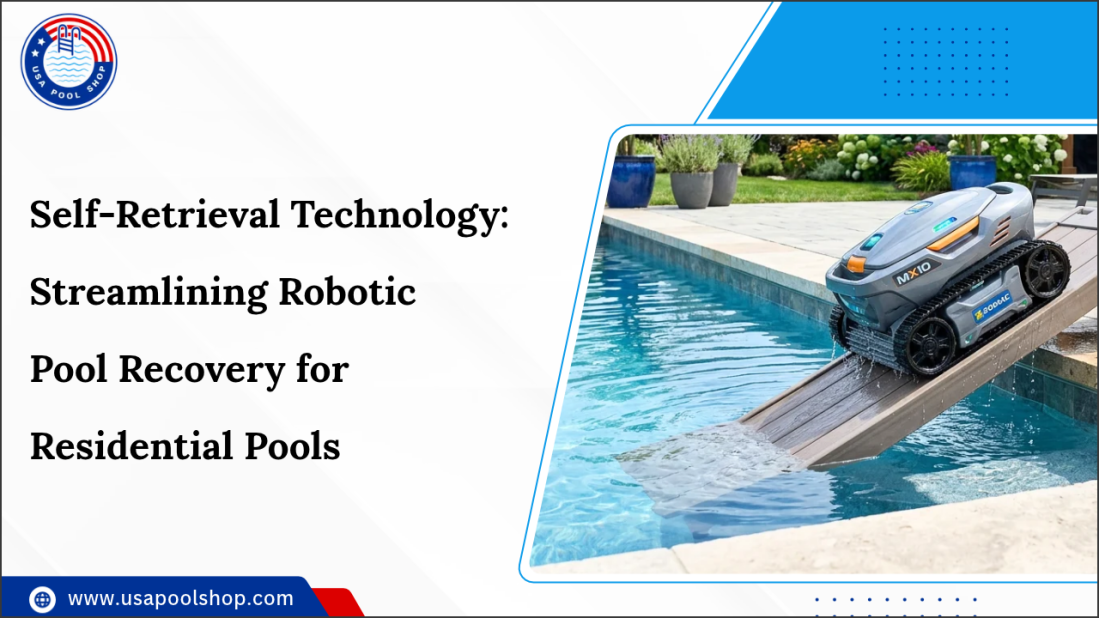
Anyone who owns a robotic pool cleaner knows the routine: the cycle ends, the robot sits at the bottom, and you're left hauling a heavy, water-logged machine out by its cable. It's awkward, messy, and hard on your back. Self-retrieval technology aims to change that by letting the robot bring itself back to the surface or the pool's edge when cleaning is done.
In this guide, we'll explain what self-retrieval technology is, how a robotic cleaner exits the pool on its own, and whether it's worth the investment for a home pool. We'll also cover what to look for when buying one and finish with a summary on whether this is the future of residential pool care.
What Is Self-Retrieval Technology in Robotic Pool Cleaners?
Self-retrieval technology lets a robotic pool cleaner return to the pool wall or surface on its own when its cycle ends. Instead of hauling a heavy, waterlogged pool robot out by its cable, you simply pick it up from the edge. Here are the common problems it solves for residential pool owners.
- Heavy Lifting: A robotic pool cleaner can weigh over 15 pounds once it fills with water, making retrieval awkward. Self-retrieval technology brings the robot within easy reach, reducing back and shoulder strain.
- Tangled Cables: Dragging a pool robot out by its cord often twists or damages the cable. Self-retrieving models use smarter navigation to avoid this, which means less untangling and a longer cable lifespan.
- Messy Handling: Pulling a dripping cleaner across the deck leaves puddles and can scratch tiles. With automatic pool cleaner retrieval, the robot parks at the waterline so you can lift it cleanly.
- Stuck Robots: Traditional cleaners can stall in the deep end or wedge against steps. Sensors and wall-climbing ability help a self-retrieving robot reach a pickup point without a pole rescue.
- Wasted Time: Without this feature, you must be present at the end of every cycle. A self-retrieving pool robot finishes its job and waits at the surface, keeping your routine hands-free.
Discover solar-powered pool robots transforming backyard pool maintenance systems to see how solar-powered cleaning technology is making pool care easier and more energy efficient.
How Does a Robotic Pool Cleaner Get Out of the Pool by Itself?
A robotic pool cleaner with self-retrieval gets out of the pool by combining sensors, wall-climbing motors, and a programmed exit routine. When the cleaning cycle ends, the robot heads for the nearest wall and moves to a spot where you can easily pick it up. Here is how the process works, step by step.
- Cycle Detection: The robot tracks its cleaning time and coverage using an internal timer and navigation software. Once the programmed cycle is complete, it switches from cleaning mode to its exit routine, with no input needed from you.
- Wall Climbing: Powerful tracks or wheels grip the pool wall so the pool robot can climb up to the waterline. Some models use gyroscope sensors to climb in a straight line and avoid sliding back down.
- Surface Positioning: Once at the waterline, the cleaner stops just below or at the edge. This automatic pool cleaner retrieval keeps the robot within arm's reach, so you can lift it without a pole or tugging on the cable.
- Obstacle Sensing: Sensors detect steps, ladders, and corners that could block the exit path. The robot adjusts its route to avoid them, which lowers the risk of getting stuck.
- Water Draining: Many models pause at the surface so water drains from the filter basket before you lift. This makes the unit lighter and keeps the deck dry.
Is a Self-Retrieving Robotic Pool Cleaner Worth It for a Home Pool?
For many homeowners, a self-retrieving robotic pool cleaner is worth the extra cost, especially if lifting a heavy pool robot is a hassle. These models usually cost more than standard cleaners, so the value depends on your pool and your habits. Here are the main factors to weigh before you decide.
- Less Strain: Pulling a waterlogged cleaner from the pool floor is hard on your back and shoulders. A self-retrieving pool robot waits at the waterline, which makes it a practical choice for older owners and anyone with joint or mobility concerns.
- Higher Price: Self-retrieval is a premium feature, so expect to pay more upfront than for a basic robotic pool cleaner. Compare that against the convenience you gain and the cost of replacing cables damaged by rough handling.
- Pool Size: Larger pools and those with deep ends or tall walls benefit the most, since the robot is harder to reach by hand. For a small, shallow pool, a standard cleaner with a pole may be enough.
- Time Savings: Because the robot parks itself at the surface, you don't have to be present when the cycle ends. This suits busy owners who schedule cleanings and want truly hands-free pool maintenance.
- Long-Term Value: Gentler handling means less wear on the cable and fewer scratches on tiles or coping. Over several seasons, that can extend the life of your pool cleaner and make the investment easier to justify.
What to Look for When Buying a Self-Retrieving Pool Robot?
Choosing the right self-retrieving pool robot comes down to matching its features to your pool and budget. Not every robotic pool cleaner handles retrieval the same way, so it pays to compare models carefully. Use the table below to check the key factors before you buy.
Feature | What to Look For | Why It Matters |
Retrieval Method | Wall climbing to the waterline, or app/remote recall to a pickup point | Determines how easily you can reach the robot at the end of a cycle |
Pool Compatibility | Support for your pool's size, shape, and surface (vinyl, tile, concrete, or fiberglass) | Ensures the robot can climb and park properly in your pool |
Battery Life | Runtime that covers your pool size with power to spare (for cordless models) | Let the robot finish cleaning and still reach the surface. |
Cable Length and Swivel | A cable long enough to reach the whole pool, with a tangle-free swivel (for corded models) | Prevents knots and keeps the robot from stalling mid-cycle |
Cleaning Coverage | Floor, wall, and waterline cleaning in one cycle | Gives a more complete clean and lets the robot use its wall-climbing ability |
Filtration Type | Fine-mesh filters or multi-layer baskets that are easy to remove and rinse | Captures debris effectively and makes maintenance quicker |
Weight and Handling | A lightweight design with water-draining features at the surface | Makes lifting easier, especially after the robot has parked itself |
Smart Features | App control, scheduling, progress tracking, and obstacle sensors | Makes the robotic pool cleaner easier to manage and recall |
Energy Efficiency | Low power consumption and efficient motors | Helps reduce long-term operating costs |
Price and Value | A balance of upfront cost, features, and expected lifespan | Helps you avoid overpaying for features you won't use |
Warranty and Support | Clear coverage, available replacement parts, and responsive customer service | Protects your investment, since self-retrieval adds moving parts and electronics |
Summary: Is Self-Retrieval the Future of Residential Pool Cleaning?
Self-retrieval technology is making robotic pool cleaners easier to use by removing the heavy lifting and cable handling at the end of each cycle. For many homeowners, especially those with larger pools, deeper walls, or mobility concerns, a self-retrieving pool robot offers real convenience and a strong long-term value.
Key Takeaways
- Self-retrieval technology lets a robotic pool cleaner return to the pool wall or surface on its own when its cycle ends.
- Wall climbing, cycle detection, and obstacle sensors work together to guide the pool robot to an easy pickup point.
- Automatic pool cleaner retrieval reduces back strain, cable tangling, deck mess, and the need for pole rescues.
- Self-retrieving models usually cost more upfront, but gentler handling can help extend the life of the cleaner and its cable.
- Larger pools, deep ends, and tall pool walls benefit the most, while small, shallow pools may do fine with a standard cleaner.
- Before buying, compare the retrieval method, pool compatibility, battery life, smart features, and warranty coverage.
- Choosing a robot that fits your pool, routine, and budget can make pool maintenance truly hands-free.
Keep your robotic pool cleaner performing at its best with premium replacement parts from USAPoolShop. We offer quality cables, filters, brushes, tracks, and other parts for robotic cleaners, along with pumps, heaters, and more from trusted brands, helping you complete repairs quickly and keep your pool ready for every swim season.
FAQs
What is self-retrieval technology in a robotic pool cleaner?
Self-retrieval technology lets a robotic pool cleaner return to the pool wall or waterline on its own when its cleaning cycle ends. This means you can pick up the robot from the edge instead of pulling it out by the cable.
Do self-retrieving pool robots work in all types of pools?
Not always. Performance depends on your pool's size, wall design, and surface type, such as vinyl, tile, concrete, or fiberglass. Check the manufacturer's compatibility details to confirm the robot can climb and park properly in your pool.
Are self-retrieving robotic pool cleaners worth the extra cost?
For many homeowners, yes. They reduce heavy lifting, cable tangling, and deck mess, and they are especially helpful for larger pools, deep ends, or owners with mobility concerns. If you have a small, shallow pool, a standard robotic cleaner may be enough.
| Disclaimer: This article is for general informational purposes only. Features, pricing, and performance vary by brand and model, so please check the manufacturer's specifications and consult a pool professional |


Validate your login