
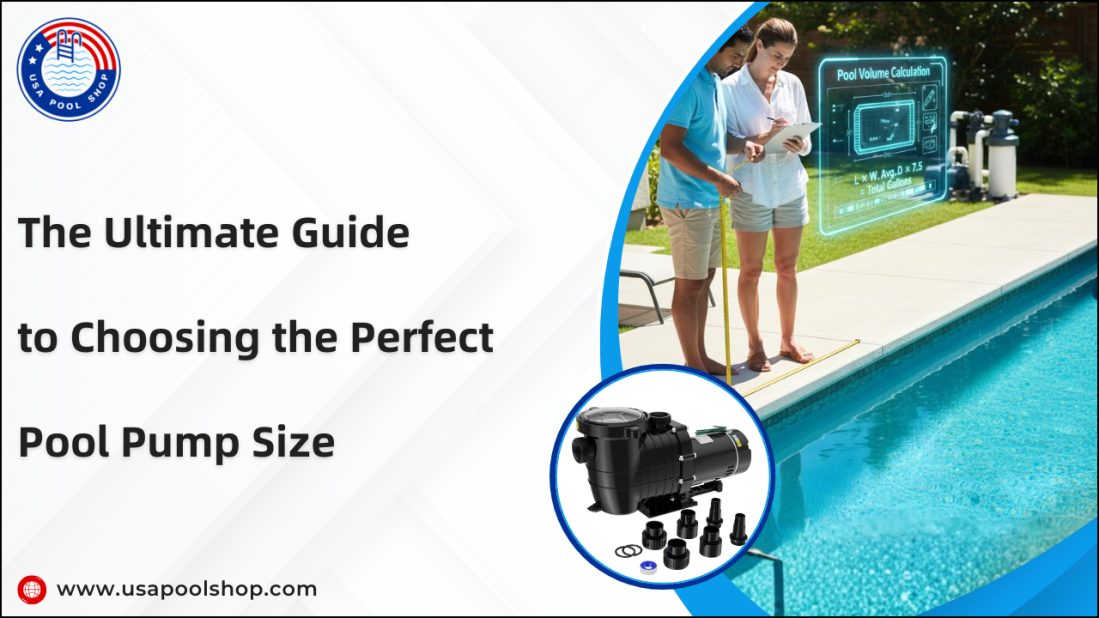
Selecting the correct pool pump size is one of the most important decisions for maintaining a healthy, efficient, and long-lasting swimming pool. A pool pump is key to the circulation system, responsible for moving water through the filter, heater, and other equipment to keep the pool clean and safe. When the pump is not properly sized, the entire system can suffer, leading to higher energy bills, poor water clarity, and premature wear on pool equipment.
Many pool owners assume that a larger or more powerful pump will always perform better. In reality, pump sizing must align closely with pool volume, plumbing design, and system requirements. An undersized pump may struggle to circulate water effectively, while an oversized pump can waste energy and stress components. This guide explains the technical and practical aspects of pool pump sizing in plain, professional terms.
Understanding Pool Pump Basics
A pool pump’s primary function is to move water from the pool, through the filtration and sanitation system, and back into the pool at a consistent rate. This circulation removes debris, distributes chemicals evenly, and helps maintain stable water quality.
Pool pumps are commonly available as single-speed, dual-speed, and variable-speed models, each offering different levels of efficiency, control, and operating cost depending on how the pool is used.
The pool pump pulls water from the skimmer and main drain, pushes it through the filter to remove dirt and debris, and then returns clean water to the pool. Without proper pumping action, water quickly becomes stagnant, increasing the risk of algae growth and poor sanitation.
Single-speed, dual-speed, and variable-speed pump differences
Single-speed pumps run at a constant, fixed speed whenever they are on. While simple and inexpensive upfront, they are the least energy-efficient option.
Dual-speed pumps operate at two different speeds, allowing lower-speed operation for daily circulation and higher speed for vacuuming or backwashing.
Variable-speed pumps offer the most flexibility, allowing precise control over flow rate and energy use to match system needs.
Why Proper Pool Pump Sizing Is Critical
Correct pool pump sizing ensures that water circulates efficiently without overworking the system. Proper sizing directly affects energy consumption, water quality, and equipment durability.
When a pump is mismatched to the pool system, it often leads to unnecessary operating costs and avoidable maintenance issues.
An oversized pump moves water too quickly, increasing pressure in the plumbing and filter. This can result in noisy operation, shortened equipment life, and higher electricity usage.
An undersized pump, on the other hand, may fail to circulate the entire pool volume within the recommended turnover time, leading to cloudy water and ineffective sanitation.
Oversized pumps draw more power than necessary, especially when operating at high speed for extended periods. This wastes energy and raises monthly utility bills.
Undersized pumps may need to run for longer hours to compensate, which can also increase wear on the motor and reduce overall efficiency.
Key Factors That Determine the Right Pool Pump Size
Several technical and environmental factors influence the correct pump size for a pool. Understanding these elements is essential for making an accurate selection. Ignoring even one of these factors can result in poor pump performance and inefficient system operation.
Key Factor | Description |
Pool volume | Measured in gallons and forms the foundation of pump sizing. Larger pools require higher flow rates to circulate water effectively. |
Turnover rate | Refers to the time needed to circulate the entire pool water, typically every 8–12 hours for residential pools. Shorter turnover times demand stronger pump performance. |
Pipe diameter | Smaller or narrower pipes increase water resistance, forcing the pump to work harder, which impacts sizing requirements. |
Plumbing layout | Long pipe runs, sharp bends, and multiple fittings increase resistance and reduce flow efficiency. |
Total dynamic head (TDH) | Represents the total resistance within the circulation system and is critical for selecting a pump that delivers proper flow under real conditions. |
Filter type | Cartridge, sand, and DE filters each have different flow rate limits that must align with the pump output. |
Heater | Pool heaters add resistance to water flow and must be considered when determining the correct pump size. |
Additional pool features | Spas, waterfalls, solar heating systems, and other features increase system demand and influence pump capacity needs. |
How to Calculate Pool Pump Size
Accurate calculations help ensure that the selected pump meets performance needs without excess power. The process involves understanding basic pool math and system requirements. Taking the time to calculate correctly reduces the risk of costly equipment changes later.
Step-by-step pool volume calculation
Pool volume is calculated using the pool’s shape, average depth, and surface area.
Rectangular pools: length × width × average depth × 7.5.
Circular pools: Diameter × Diameter × Average Depth × 5.9
Oval pools: Length × Width × Average Depth × 6.7
Freeform or irregular pools require dividing the pool into smaller sections or using approximations to determine total gallons accurately.
Understanding flow rate (GPM) and turnover time
Flow rate is measured in gallons per minute (GPM). To determine the required GPM, divide the pool volume by the desired turnover time in minutes.
To do this, convert your turnover hours into minutes (8 × 60 = 480), then divide the pool volume by 480.
This calculation provides a target flow rate that guides pump selection and ensures effective water circulation.
Matching pump horsepower to system demand
Horsepower alone does not define pump performance. A lower-horsepower pump with an efficient design may outperform a higher-horsepower unit in the same system.
Matching pump capability to TDH and required GPM using performance curves is more reliable than choosing based only on horsepower ratings.
Pool Pump Size Recommendations by Pool Type
Different pool types have different circulation demands. Standard sizing guidelines help narrow options before considering detailed calculations.
These recommendations provide a practical starting point for most residential pool owners.
Small above-ground pools (0.5 – 1.0 HP): Lower flow rates are required due to smaller water volume and simple plumbing. Low-horsepower pumps are usually sufficient. Oversizing leads to higher energy use and filter strain.
Medium residential in-ground pools (1.0 – 1.5 HP): Mid-range pump sizing works best to support filtration and accessories. Variable-speed pumps provide better efficiency, energy savings, and flexible operation.
Large pools, spas, and pools with water features (1.5–2.0 HP): Higher flow rates are needed for larger volumes and added features like spas or waterfalls. Accurate TDH calculations are essential to maintain proper pressure and performance.
Choosing Between Horsepower and Flow Rate
Many pool owners focus solely on horsepower, but this approach often leads to incorrect pump selection. Flow rate and system compatibility are more important indicators. Understanding how pumps are rated helps avoid common misconceptions.
Why horsepower alone can be misleading
Horsepower does not account for pump efficiency, impeller design, or system resistance. Two pumps with identical horsepower ratings can perform very differently.
Higher horsepower often increases energy consumption without providing meaningful performance benefits when TDH is low.
Importance of pump performance curves
Pump performance curves show how the flow rate changes under different head pressures. These charts allow accurate matching of pump capability to system requirements.
Using performance curves ensures the selected pump delivers the needed GPM at the actual operating TDH.
Explore Swimming Pool Safety Equipment Checklist: Here's What You Need to Know
Energy Efficiency and Variable-Speed Pump Benefits
Energy efficiency has become a primary consideration for pool owners in the United States. Proper pump sizing plays a major role in reducing operating costs. Modern pump technology supports both efficiency and long-term system health.
Variable-speed pumps adjust motor speed to deliver only the flow required at a given time. Lower speeds consume significantly less electricity.
When properly sized, these pumps can reduce energy use while maintaining consistent water quality and circulation.
Current energy regulations encourage the use of efficient pool pumps. Many residential pools now benefit from variable-speed models that meet or exceed standards.
Selecting the correct size ensures both regulatory compliance and optimal real-world performance.
Common Pool Pump Sizing Mistakes to Avoid
Mistakes in pump sizing often stem from assumptions rather than calculations. Avoiding these errors saves money and extends equipment lifespan. Professional evaluation or careful calculation prevents most of these issues.
Oversizing based on “more power is better”
Increases energy costs and creates excessive system pressure without improving water quality.
Select a right-sized pump that delivers efficient circulation without stressing plumbing or filters.
Ignoring plumbing and filter limitations
Causes restricted water flow, poor efficiency, and potential equipment damage.
Match pump capacity with pipe size and filter limits to keep all components operating within design ranges.
Find out How to Choose the Right Pool Pump Fittings
Conclusion
Choosing the correct pool pump size is essential for maintaining clean water, controlling energy costs, and protecting pool equipment. Proper sizing ensures balanced circulation, efficient filtration, and dependable operation across all pool components.
By focusing on pool volume, flow rate, TDH, and system design rather than horsepower alone, pool owners can make informed purchasing decisions. A properly selected pump improves daily performance and reduces long-term expenses, making it a practical investment in pool care and sustainability.
USAPoolShop offers a wide range of high-quality filters, pumps, valves & plumbing, heaters, and cleaners from top manufacturers. With fast shipping and expert support, we ensure your pool stays in top shape year-round
References:
https://www.energy.gov/energysaver/choosing-installing-and-operating-efficient-swimming-pool-pump
https://basc.pnnl.gov/resource-guides/variable-speed-pool-pumps
FAQs
Can I replace my pool pump with a different size without upgrading my filter?
Yes, but the new pump’s flow rate must stay within the filter’s maximum rating to avoid pressure damage.
How often should pool pump sizing be reviewed or reassessed?
Pool pump sizing should be reviewed when plumbing changes occur, new pool features are added, or energy costs significantly increase.



Validate your login