
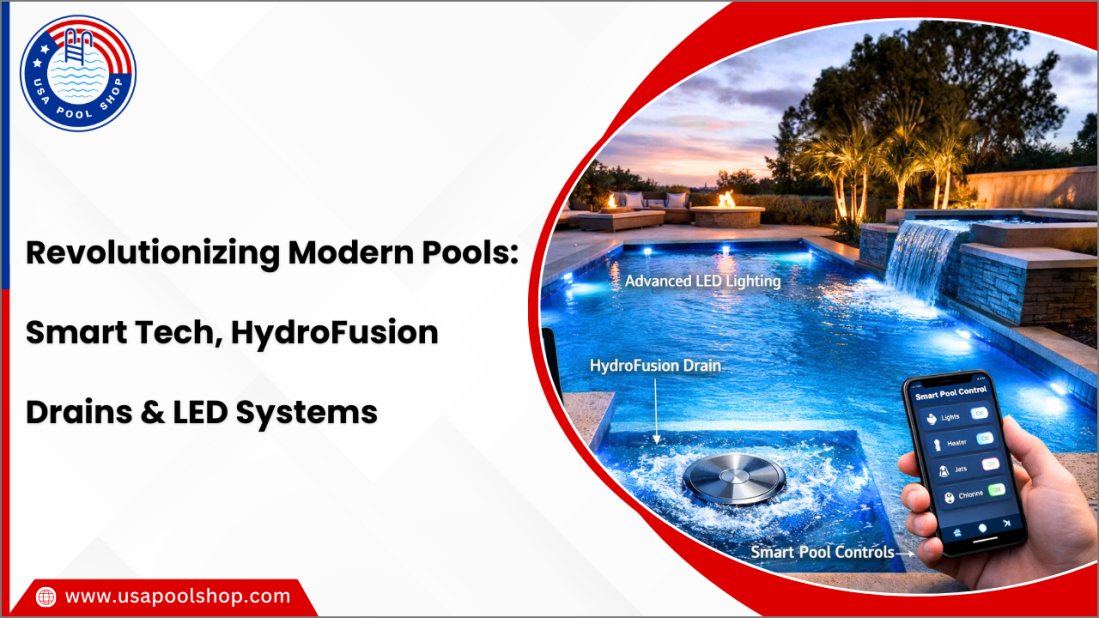
Modern swimming pool construction has evolved beyond concrete shells and basic filtration systems. Today’s pools are smart, efficient, and designed to deliver superior performance, safety, and sustainability. Homeowners now expect crystal-clear water, low maintenance, energy efficiency, and advanced lighting and electrical systems for automated pool control, along with safety features that work seamlessly. Intelligent automation allows pumps, heaters, and filtration to operate efficiently while sensors monitor water quality and chemical balance, creating a safe, convenient, fully automated swimming experience.
New construction technologies combined with data-driven water management are transforming pool design and maintenance. Innovations such as HydroFusion drains, saltwater chlorination, LED lighting, smart automation systems, and AI-enabled monitoring enhance comfort, efficiency, and aesthetics, making modern pools fully automated, safe, and visually appealing year-round.
The Evolution of Smart Technologies in Modern Pool Construction
Pool construction has come a long way from traditional designs that relied heavily on manual maintenance. In older pools, owners needed to test chemicals by hand, monitor water clarity visually, and adjust pumps and filters manually. This often led to fluctuating water conditions, wasted chemicals, and extra wear on equipment.
Modern pool technologies have changed the way pools are built and maintained. Smart systems, automation, and sensors are now integrated during construction to monitor water quality, circulation, temperature, and equipment performance continuously. These technologies prevent issues before they occur, rather than reacting to them after the fact.
Continuous Monitoring: Smart sensors track pH, chlorine, temperature, and water clarity in real-time, ensuring safe and balanced water at all times.
Automation Integration: Pumps, filters, chemical feeders, and lights are controlled automatically, reducing manual effort and human error.
Proactive Maintenance: AI-driven insights predict when equipment needs service, preventing breakdowns and extending lifespan.
Energy Efficiency: Smart scheduling and variable-speed pumps lower electricity use while maintaining optimal performance.
Enhanced User Experience: Homeowners and operators enjoy clean, safe water with minimal maintenance effort, making pool ownership more convenient.
By incorporating these technologies at the construction stage, modern pools operate more efficiently, safely, and sustainably, benefiting both residential and commercial pool owners.
How Smart Technologies are Implemented in Modern Pool Construction
Here’s how smart technologies like HydroFusion drains & LED systems are implemented in modern pool constructions:
Pool Type | Typical Size & Depth | Construction-Level Smart Technologies | Practical Example |
Small Pools (Residential) | 12×24 ft to 16×40 ftDepth: 3.5–6 ft | Compact HydroFusion drains, saltwater chlorination units, basic automation panels, LED lighting | A backyard family pool uses smart controls to schedule pump operation, adjust chlorine during hot days, and turn on LED lights automatically via a mobile app. |
Medium Pools (Apartments & Hotels) | 25–40 ft long Depth: 4–5 ft | Multiple circulation points, higher-capacity filters, built-in water quality sensors, expanded automation systems | A hotel pool increases filtration and sanitizer levels during busy weekends and reduces them at night to save energy while maintaining clear water. |
Large Pools (Commercial & Public) | 50+ ft long Depth: 3 ft (leisure) to 8–12 ft (lap/diving) | Multiple HydroFusion drain networks, advanced sanitation systems, centralized AI platforms, zone-based monitoring | A public facility manages children’s areas, lap lanes, and diving zones separately using AI to maintain safety, circulation, and water balance throughout the day. |
Disclaimer: The technologies and examples shown are for general guidance and may vary by design, location, and regulations. Always consult a certified pool professional before installation to ensure safety and compliance.
Explore plunge pools: the small-space solution for big relaxation, perfect for unwinding, refreshing, and making the most of limited outdoor space.
How Smart Systems Improve Pool Safety and Efficiency
Integrating modern technologies in pool construction offers multiple advantages for small, medium, and large pools:
Improved Water Circulation and Safety: HydroFusion drains distribute suction across multiple outlets, reducing the risk of entrapment and ensuring even water flow throughout the pool.
Consistent Water Quality: Smart automation and AI-powered sensors monitor pH, sanitizer levels, and temperature in real time, automatically adjusting chemical dosing to prevent cloudy water, algae, or chemical imbalances.
Energy Efficiency: LED lighting consumes significantly less power than traditional lights, and automation platforms optimize pump and filtration cycles to reduce electricity usage without compromising performance.
Enhanced User Experience: Customizable LED lighting creates a dynamic ambiance for relaxation or entertainment, while smart controls allow remote management of lighting, pumps, and chemical systems via mobile apps or dashboards.
Early Issue Detection and Maintenance: Intelligent monitoring identifies potential equipment failures, filtration inefficiencies, or chemical deviations early, reducing repair costs and preventing downtime.
Regulatory and Safety Compliance: Advanced drain systems and automated monitoring help commercial pools meet safety standards and maintain proper sanitation consistently.
Eco-friendly Operation: Efficient circulation, precise chemical dosing, and LED lighting minimize resource waste, making pool maintenance greener and more sustainable.
These benefits combine to deliver safer, cleaner, more efficient, and highly enjoyable pool experiences for both residential and commercial settings.
Challenges in Adopting Modern Pool Technologies
Traditional pool construction often creates long-term challenges related to safety, maintenance, and operating costs. Modern pool technologies address these issues directly when integrated during construction.
High Energy and Chemical Costs
Traditional pools rely on fixed-speed pumps, manual chemical dosing, and inefficient lighting, leading to wasted resources.
Solution: Smart automation systems optimize pump schedules, use precise chemical dosing, and integrate energy-efficient LED lighting to significantly reduce operating costs.
Inconsistent Water Quality
Manual testing can miss sudden changes in pH or sanitizer levels, causing cloudy water or algae growth.
Solution: Smart sensors and automated dosing continuously monitor water conditions and correct imbalances instantly, keeping water clean and stable.
Poor Circulation and Safety Risks
Old drain designs create dead zones and increase the risk of suction entrapment.
Solution: HydroFusion drains distribute suction evenly, improving circulation, enhancing swimmer safety, and supporting better filtration.
Unexpected Equipment Failures
Pumps, filters, and heaters often fail without warning, resulting in costly repairs.
Solution: AI-powered monitoring tracks performance trends and provides early alerts, enabling preventive maintenance before breakdowns occur.
Problem: Complex Pool Management
Multiple manual controls increase errors and maintenance effort.
Solution: Centralized automation platforms manage circulation, sanitation, and lighting from one dashboard, simplifying daily pool operation.
By solving these problems at the construction stage, modern pool technologies create safer pools, reduce manual effort, lower long-term costs, and ensure reliable performance throughout the pool’s lifespan.
Learn how to transform your pool with powerful AI water analysis for safe, clean water.
Conclusion: Building Smarter, Safer, and More Efficient Pools
Modern pool construction has evolved from manual, reactive systems to intelligent, technology-driven design. By integrating smart automation, HydroFusion drains, advanced sanitation systems, and energy-efficient LED lighting during construction, pools achieve higher safety standards, consistent water quality, and simplified management. These technologies work together to improve circulation, reduce operating costs, and enhance the overall user experience for residential, community, and commercial pools alike.
Instead of addressing problems after they occur, smart pool technologies enable proactive control and long-term reliability. With proper planning and expert installation, intelligent pool construction delivers sustainability, performance, and peace of mind—making it a forward-looking investment for modern pool owners and operators.
Key Takeaways:
Smart technologies shift pool management from reactive maintenance to proactive control.
HydroFusion drains enhance swimmer safety and ensure balanced water circulation.
Automation and intelligent monitoring maintain consistent water quality with less manual effort.
LED lighting and efficient equipment reduce energy consumption and operating costs.
Thoughtful integration during construction ensures durability, scalability, and long-term value.
Looking to upgrade your modern pool? Shop high-quality pool replacement parts from USAPoolShop, including heaters & controls, lighting & electrical, pumps & motors, valves & plumbing, and essential safety equipment, all from trusted brands like Jandy, Hayward, and Pentair. Keep your pool running smoothly, efficiently, and safely with fast shipping available for all orders.
References:
https://designthoughts.org
https://integritypools.org/historical-pool-designs
FAQs
What are the main benefits of using smart technologies in pool construction?
Smart technologies improve water quality, enhance swimmer safety, reduce energy and chemical use, and simplify daily pool management through automation and real-time monitoring.
Can smart pool systems be used for both residential and commercial pools?
Yes. Smart pool technologies are scalable and can be adapted for small residential pools, medium community pools, and large commercial facilities with construction adjustments based on pool size and usage.
Do smart pools require more maintenance knowledge?
Not significantly. While basic familiarity with system alerts and dashboards is helpful, smart pools reduce manual work and make maintenance easier by detecting and preventing issues automatically.



Validate your login