
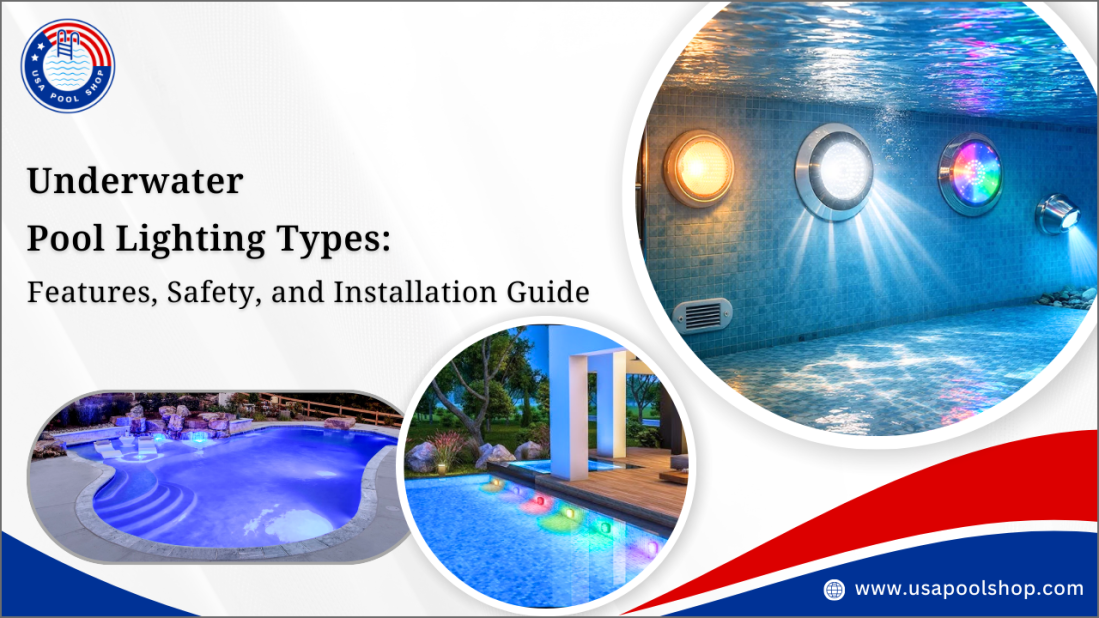
Underwater pool lighting enhances nighttime visibility, improves swimmer safety, and adds an appealing glow to residential and commercial pools. Modern options like LED, fiber optic, and solar lights offer energy efficiency, durability, and attractive lighting effects.
Selecting the right system involves comparing brightness, efficiency, waterproof protection, and electrical safety standards. Proper installation with low-voltage systems and GFCI protection ensures safe, long-lasting performance.
This blog explains underwater pool lighting types, key features, safety standards, and installation basics.
Understanding Underwater Pool Lighting Types and Their Applications
There are several Underwater Pool Lighting types, each designed to meet different brightness, efficiency, and installation needs. Below is a simple explanation of each type, why it is chosen, and where it is commonly used.
-
LED Pool Lights: LED pool lights are energy-efficient, long-lasting, and offer color-changing features. They are chosen for modern pools that require low maintenance and enhanced ambiance.
Applications:
Residential and commercial pools
Smart lighting systems
Color-changing pool designs
-
Halogen Pool Lights: Halogen pool lights provide bright white illumination and are commonly used in older pool systems. They are chosen mainly for compatibility with existing fixtures.
Applications:
Replacement in older pools
Pools needing strong white light
-
Incandescent Pool Lights: Incandescent pool lights offer a warm traditional glow but consume more energy. They are typically found in older installations.
Applications:
Legacy pool systems
Basic lighting setups
-
Fiber Optic Pool Lights: Fiber optic pool Lights use a remote light source, reducing electrical risk in water. They are chosen for decorative and safety-focused lighting.
Applications:
Accent lighting for steps and features
Decorative pool designs
-
Surface-Mounted Underwater Lights: Surface-Mounted underwater lights are attached directly to the pool wall, making installation easier. They are ideal for retrofitting existing pools.
Applications:
Pool upgrades
Above-ground and vinyl pools
-
Flush-Mounted Underwater Lights: Installed within a wall niche for a sleek, seamless look. Preferred for new in-ground pools needing balanced illumination and refined aesthetics.
Applications:
New in-ground pools
Custom or luxury pool designs
-
Solar Pool Lights: Powered by sunlight with built-in rechargeable batteries, eliminating wiring needs. Chosen for energy savings and eco-friendly performance.
Applications:
Above-ground pools
Temporary or decorative lighting setups
Eco-conscious pool owners
Understanding these lighting options helps pool owners select the right underwater pool lighting solution based on safety, efficiency, and design requirements.
Explore this guide to learn How To Choose The Best Pool Heater: Gas, Electric, or Solar options for efficiency, cost, and performance.
Key Features to Compare in Modern Underwater Pool Lights
When selecting underwater pool lighting, it’s important to compare the main features that affect performance, durability, and overall pool experience. The following table highlights key factors to consider when choosing modern pool lights:
Feature | Description | Benefit |
Energy Efficiency | LED Pool Lights consume far less electricity than halogen or incandescent models. | Reduces energy costs and heat output, making the system more efficient. |
Brightness and Coverage | Measured in lumens; larger or deeper pools require higher output. | Ensures even underwater visibility without dark spots or glare. |
Color and Control Options | RGB color-changing options and remote or app-based controls. | Allows customizable ambiance and easy operation for parties or relaxation. |
Waterproof Rating and Durability | Fixtures rated IP68 with corrosion-resistant materials. | Protects against water intrusion and extends lifespan, especially in saltwater pools. |
Lifespan and Maintenance | LED systems last longer and require minimal upkeep. | Reduces frequent replacements, saving time and long-term costs. |
Installation Flexibility | Compatible with flush-mounted or surface-mounted setups. | Makes installation easier for new pools or retrofits. |
By evaluating these features carefully, pool owners can choose lighting that provides safety, efficiency, and visually stunning effects for years to come.
Explore Smart Pool and Best Lighting Ideas for a Stunning Backyard to create a beautiful, inviting, and relaxing outdoor space.
Safety Standards and Electrical Requirements for Underwater Pool Lighting
Safety is essential when installing underwater pool lighting, as water and electricity require strict protective measures. Proper electrical setup ensures swimmer safety and long-term system reliability.
Low-Voltage Operation: Most modern pool lights operate on 12V low-voltage power, which greatly reduces the risk of electrical shock. A transformer converts standard household voltage into a safer level before supplying power to underwater fixtures.
GFCI Protection: Ground Fault Circuit Interrupter (GFCI) protection is mandatory for all pool lighting systems. It automatically shuts off electricity if it detects a fault or imbalance, preventing potential shock hazards.
Proper Grounding and Bonding: Grounding and bonding ensure that all metal components around the pool share the same electrical potential. This prevents stray currents and enhances overall swimmer protection.
Code Compliance: All installations must follow national and local electrical codes. Professional installation is strongly recommended to ensure safe wiring, proper inspection, and full regulatory compliance with the correct safety equipment.
Proper adherence to these safety standards ensures secure, reliable, and long-lasting underwater pool lighting performance.
How to Install Underwater Pool Lights Correctly and Securely
Correct installation ensures long-lasting performance, proper illumination, and safe operation of your underwater lighting system.
Step 1: Plan the Lighting Layout
Determine the number of lights based on pool dimensions. Position fixtures to avoid glare directly into swimmers’ eyes and ensure even light distribution.
Step 2: Install the Niche or Mounting Bracket
For flush-mounted systems, a wall niche must be installed during pool construction. Surface-mounted fixtures require strong, secure brackets attached firmly to the pool wall.
Step 3: Run Electrical Conduit and Transformer
Low-voltage systems require a transformer installed above water level. All wiring should run through waterproof conduits to prevent moisture damage and electrical hazards.
Step 4: Connect to GFCI-Protected Circuit
Ensure the lighting system connects to a properly installed GFCI breaker or outlet for electrical protection.
Step 5: Secure and Seal the Fixture
Install the light housing carefully and check gaskets for watertight sealing. Tighten fittings according to manufacturer specifications.
Step 6: Test Before Final Use
Before full operation, test the system to confirm brightness levels, color functions, and proper electrical safety performance.
Professional installation is strongly recommended to avoid costly errors or safety risks.
Summary: Choosing Safe and Efficient Underwater Pool Lighting for Long-Term Use
Selecting the right underwater pool lighting system involves balancing efficiency, brightness, safety standards, and installation requirements. Modern LED solutions provide long-lasting performance, while specialized options like fiber optic systems serve decorative and safety-focused applications.
By comparing features carefully and ensuring professional installation, pool owners can enjoy safe, energy-efficient, and visually appealing lighting for years to come.
Key Takeaways
Choose energy-efficient lighting, especially LED systems, for long-term cost savings.
Ensure proper brightness levels based on pool size and depth.
Prioritize safety features like low-voltage systems and GFCI protection.
Select durable, waterproof fixtures suitable for your pool type.
Always consider professional installation for a safe and compliant setup.
For reliable and energy-efficient lighting solutions, shop at USA Pool Shop for quality underwater pool lights, LED systems, and essential installation components. Trusted products ensure safe installation, long-lasting performance, and brilliant pool illumination.
FAQs
How do I know what type of pool light I have?
Turn off the power and check the bulb type or fixture label. The model number or pool manual can help confirm whether it’s LED, halogen, or incandescent.
What are the three types of LED lights?
The main types are single-color white LEDs, RGB color-changing LEDs, and smart LEDs with remote or app control features.
Are LED underwater lights better?
Yes, LED lights are more energy-efficient, last longer, and offer better lighting options compared to halogen or incandescent pool lights.
| Disclaimer: This blog is for informational purposes only and provides general guidance on underwater pool lighting. Always consult a licensed electrician or pool professional for safe installation and code compliance. |


Validate your login