
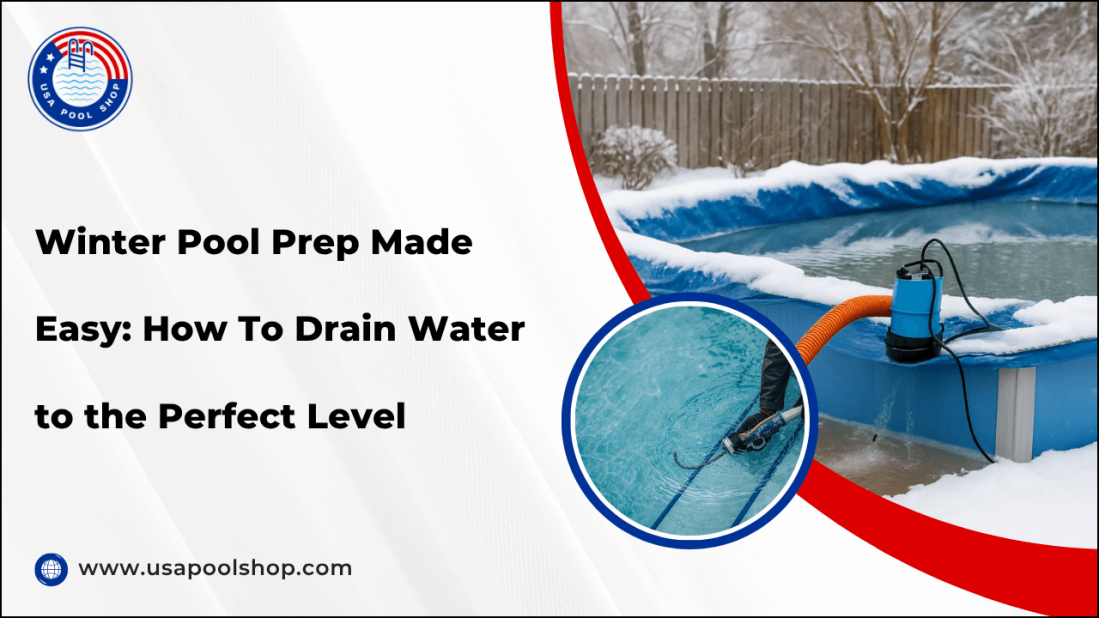
Preparing your swimming pool for winter is a key maintenance step for homeowners in regions where freezing temperatures are common. A few hours of preparation in the fall can prevent costly repairs, structural damage, and unnecessary stress when spring arrives.
While many pool owners focus on chemical balancing or covering the pool, they also adjust the water to the correct winter level. This guide explains why the right level matters, how to drain the water safely for various filtration systems, and the common mistakes to avoid.
Why Lowering the Pool Water Level Matters
Properly lowering the pool water level before winter prevents damage caused by freezing, expansion, and excess precipitation. It also helps protect covers, tiles, and structural surfaces from unnecessary stress.
When water freezes, it expands, increasing pressure on the pool walls and coping. Combined with snow or rain, this can cause overflow, crack tiles, or stress seams in vinyl liners.
Mesh covers are designed to allow water through, but they also allow precipitation to collect throughout the winter. Without lowering the water, the pool can fill to the coping level, forcing the cover upward and potentially damaging it.
Reducing the water level creates extra space for rain, snowmelt, and ice expansion. This space acts as a buffer, preventing overflow and protecting the skimmer and filtration system. It also helps minimize maintenance checks through the winter, ensuring a secure and stable setup until reopening season.
Draining to the right level prevents winter damage, reduces cover strain, and saves time and money during spring cleanup.
What Is the Proper Level to Drain To?
Determining the correct winter water level depends on pool type, cover style, and climate.
The general recommendation is to lower the water to six to eight inches (15–20 centimeters) below the skimmer opening.
This level gives enough room for winter precipitation without exposing too much of the pool surface.
Keeping the water too high can lead to overflow and ice-related stress, while draining too low can expose pool surfaces, causing liner shrinkage or structural cracking in fiberglass or concrete pools.
Key factors affecting drain levels
Pool type:
Vinyl pools require a moderate water level to keep liners from shrinking.
Fiberglass pools must maintain enough water weight to prevent structural movement or “floating.”
Concrete pools are more tolerant but still need water for balance and freeze protection.
Cover style:
Mesh covers usually require a lower water level to account for precipitation flow-through.
Solid or airtight covers benefit from slightly higher water levels for support beneath the cover.
Manufacturer guidelines:
Always review manufacturer recommendations for your pool and cover. Many pool companies and regional professionals provide climate-specific advice.
When uncertain, consult a certified pool technician or reference trusted resources or local pool associations. Following proper guidance ensures your system stays balanced through winter without damage.
Swimming Pool Safety Equipment Checklist: Here's What You Need to Know
How to Drain the Pool: Sand and DE Filter Systems
Pools equipped with sand or diatomaceous earth (DE) filters can be drained effectively using the system’s built-in multiport valve. This method offers controlled drainage while maintaining system safety.
Before starting, confirm where your discharge water will go. Local regulations often restrict draining chlorinated water into storm drains or natural bodies of water. Always follow municipal guidelines.
Close the skimmer line and open the main drain: This allows the pump to pull water from the bottom rather than the skimmer. It prevents air from entering the system once the water level falls below the skimmer opening.
Route the waste line safely: Position the discharge hose toward a downhill area, gravel section, or approved drainage zone. Avoid directing water toward your home foundation, neighboring yards, or streets.
Set the multiport valve to “waste” or “drain”: This bypasses the filter media, allowing water to exit directly from the waste port.
Turn on the pump: Start the pump and monitor the water flow. The draining process is usually fast. Stay nearby to ensure the pump does not run dry.
Shut off the pump at the target level: When water reaches six to eight inches below the skimmer, switch off the pump immediately to prevent air intake or pump damage.
Inspect the discharge area: Check for erosion or runoff issues in the discharge zone. Ensure water drains completely without pooling.
Maintaining focus during the process helps avoid over-draining, which can harm both the pump and pool structure. Sand and DE filters provide an efficient, straightforward draining method when handled attentively.
Alternative Draining Methods: Cartridge Filters and Sump Pumps
Cartridge filter systems lack a “waste” function, so a submersible (sump) pump becomes the most practical tool for lowering the water level. This approach is safe, simple, and suitable for both in-ground and above-ground pools.
Before beginning, disconnect the main pump and filter system. Draining with the system on can cause unnecessary pressure or damage to filter components.
Position the pump: Place the submersible pump in the deepest section of the pool, typically at the center. Ensure it sits flat for optimal suction.
Connect the discharge hose: Attach a hose long enough to reach an approved drainage area. Confirm compliance with local water disposal regulations before proceeding.
Begin pumping: Plug in the pump and let it start draining. Keep a close watch on the water level, as most sump pumps do not have automatic shutoff sensors for a specific depth.
Stop at the proper level: Unplug and remove the pump as soon as the water reaches six to eight inches below the skimmer. Running a sump pump dry can burn out the motor.
Check for proper drainage flow: Observe the discharge path to ensure no flooding or backflow occurs. Adjust if needed.
Avoid using the pool’s main plumbing lines for this process, as improper backflow or reverse pressure can damage the cartridge filter system. A sump pump provides a safe, controlled way to achieve the correct water level without risking equipment damage.
After Draining: Essential Winterizing Steps for Your Pool
Once your pool is at the ideal winter level, completing a few final steps ensures full protection through freezing months. Winterizing correctly reduces algae growth, prevents staining, and protects pool plumbing.
Balance the water chemistry: Test and adjust pH, alkalinity, and calcium hardness to recommended winter levels. Add a winterizing chemical kit designed for your pool type to prevent algae and scaling during the off-season.
Install the pool cover securely: For mesh covers, ensure even tension across all anchors. For solid covers, create a tight seal around the pool perimeter. Use water bags, blocks, or locks as needed to prevent movement.
Remove and store accessories: Detach ladders, handrails, skimmer baskets, and automatic cleaners. Clean and dry them thoroughly before storage to prevent corrosion or mold.
Protect plumbing lines: Blow out skimmer and return lines with an air compressor or shop vacuum. Plug or cap the lines afterward to prevent water re-entry and freezing.
Monitor during winter: Inspect your pool after heavy rain, snow, or temperature swings. Even with correct drainage, precipitation can accumulate faster than expected. Adjust the level if necessary.
Store chemicals and tools safely: Keep winterizing chemicals and electrical tools in a dry, temperature-controlled area, away from children and pets.
Properly executed post-drain steps will help your pool remain stable and clean, ensuring an easier reopening in spring.
Common Pool Draining Mistakes and How to Avoid Them
Even experienced pool owners sometimes make costly mistakes during winter preparation. Understanding what to avoid helps maintain safety, water balance, and structural integrity.
Mistake | Description | Consequences | Prevention |
Draining Too Much Water |
|
|
|
Leaving the Water Too High |
|
|
|
Improper Discharge Practices |
|
|
|
Skipping Plumbing Adjustments |
|
|
|
Ignoring Electrical Safety |
|
|
|
Neglecting Post-Drain Inspections |
|
|
|
The Ultimate Guide to Solving Cloudy Pool Water Issues
Professional Tips for Easier Winter Pool Preparation
Small details often make a big difference when preparing a pool for winter. The following professional tips simplify the process and reduce potential risks.
Schedule drainage during mild weather: Avoid draining right before a freeze. Choose a dry day with moderate temperatures to prevent ice from forming mid-process.
Label valves and lines: Clearly mark which valves correspond to skimmers, main drains, and returns. This helps prevent confusion during spring opening.
Inspect equipment before storage: Clean and inspect pumps, heaters, and hoses for cracks or wear. Addressing issues early saves time when reopening.
Document your process: Note the date, water level, and chemicals used. Consistent documentation helps maintain pool health year after year.
Use a pool water level marker: A simple piece of tape or chalk line on the skimmer wall helps you visually gauge the proper level for future adjustments.
Implementing these small habits improves consistency and efficiency for every winterization cycle.
Draining your pool to the correct winter level may seem like a minor detail, but it is one of the most important steps in pool maintenance. The right water level accommodates freeze-thaw cycles, prevents overflow, protects the pool cover, and safeguards the structure through the cold months. Regular inspection and a few preventive measures during the off-season will make reopening in spring faster, safer, and more cost-effective. A few hours spent draining and protecting your pool this fall can save significant repair costs and ensure a smooth start to the next swimming season. USAPoolShop offers a wide range of high-quality filters, pumps, heaters, and cleaners from top manufacturers. With fast shipping and expert support, we ensure your pool stays in top shape year-round.
References:
https://www.scottsdaleaz.gov/
https://www.mesaaz.gov/
FAQs
Should I completely drain my pool before winter?
No, completely draining a pool is not recommended. Keeping some water in the pool helps balance pressure from the ground and prevents structural damage caused by freezing and thawing cycles.
When is the best time to start winterizing the pool?
Begin winterizing your pool when the temperature consistently drops below 60°F (15°C). This timing helps prevent algae growth and protects your pool equipment before freezing weather arrives.


Validate your login