
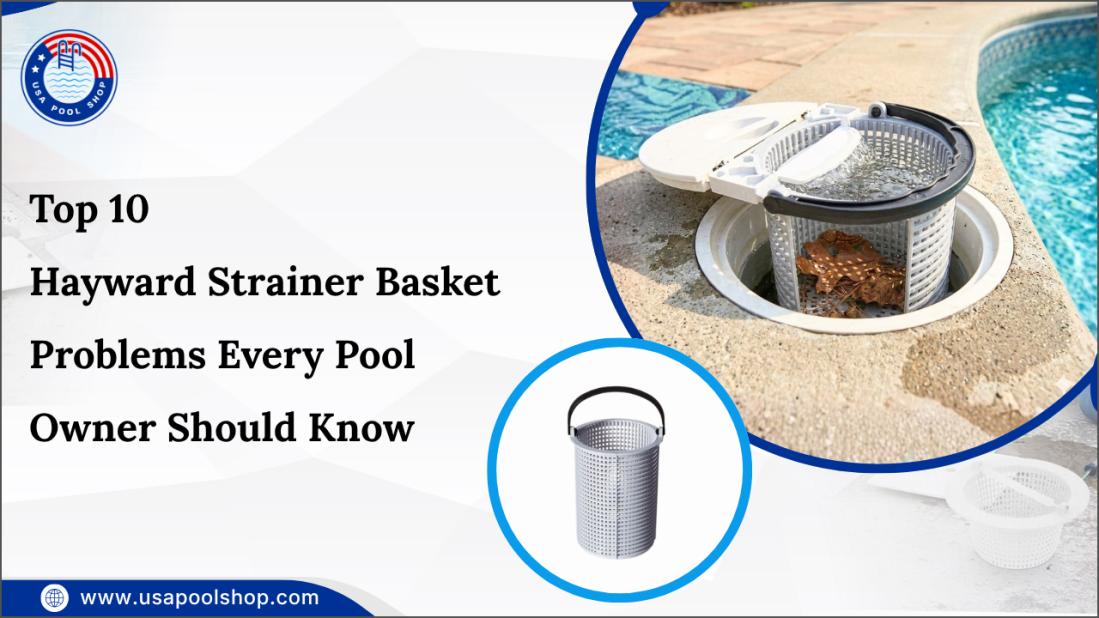
A Hayward strainer basket is a critical component of your pool pump that catches leaves, grass, insects, and other debris before they reach the pump and impeller. Over time, heavy debris buildup, physical damage, incorrect installation, and normal wear can cause the basket to restrict water flow or affect pump performance.
A problematic Hayward strainer basket can lead to symptoms such as weak pool circulation, reduced return flow, pump priming problems, air bubbles, unusual pump noise, and recurring debris-related blockages. Hayward troubleshooting documentation identifies a clogged or restricted strainer, suction-line restriction, air leaks, and impeller blockage among potential causes of low flow and pump priming issues.
In this guide, we'll cover the top 10 Hayward strainer basket problems, explain what each problem indicates, identify why it happens, and show you when cleaning, inspection, or replacement is the right solution for maintaining reliable pool circulation.
What Does a Hayward Strainer Basket Do in a Pool Pump?
A Hayward strainer basket sits inside the pump's strainer housing and provides a first level of protection for the pump by collecting larger debris before water reaches the impeller. Hayward pump documentation identifies the strainer basket as part of the pump assembly and specifically recommends checking or cleaning the basket when troubleshooting restricted flow or priming problems.
Before identifying common problems, it is important to understand the main functions of the Hayward pump strainer basket:
Catches pool debris: Collects leaves, grass, insects, and other debris before they reach the pump.
Protects the pump impeller: Helps prevent larger debris from entering and restricting the impeller.
Supports proper water circulation: Allows water to pass through the pump while containing collected debris.
Makes routine maintenance easier: Allows pool owners to remove accumulated debris without opening the entire pump assembly.
Helps maintain pump performance: A clean, correctly installed basket helps prevent unnecessary suction-side restrictions.
A strainer basket is not a substitute for the pool skimmer basket or pool filter. Each component performs a different function within the overall pool circulation system. Keeping the skimmer, pump basket, filter, and other circulation components clean helps maintain consistent water flow.
Shop atUSAPoolShop for quality Hayward pool equipment, replacement parts, and accessories designed for residential pool maintenance. Explore Hayward strainer baskets, pool pumps, filters, valves, skimmer parts, and other replacement components to support proper water circulation and keep pool equipment operating efficiently.
Hayward Strainer Basket: 10 Common Problems and Solutions
A Hayward strainer basket problem does not always mean the basket itself has failed. In some cases, debris buildup is the cause; in others, a damaged basket, incorrect fit, air leak, or related suction restriction may be responsible.
The table below highlights the most common Hayward strainer basket problems, what they indicate, why they happen, and what should be done to correct them.
Problem | What It Indicates | Why It Happens | Recommended Solution |
Clogged strainer basket | Water flow through the pump is restricted. | Leaves, grass, insects, and other debris accumulate inside the basket. | Turn off the pump and clean the basket thoroughly. |
Cracked or broken basket | Debris may bypass the basket and reach the pump. | Age, impact, repeated handling, or physical stress can damage the plastic. | Replace the damaged Hayward pump basket with the correct part. |
Basket is difficult to remove. | Debris or basket damage may be interfering with removal. | Debris can become lodged around the basket, or the basket may be distorted. | Shut down and depressurize the system before inspecting and removing the obstruction. |
The basket is not seated correctly. | Water flow or pump operation may be affected. | Incorrect installation, deformation, or an incompatible basket can prevent proper positioning. | Reinstall or replace the basket with a compatible model-specific part. |
Air bubbles appear after cleaning. | The circulation system may be drawing air on the suction side. | A poorly seated pump cover O-ring, loose connection, or suction-side leak may be present. | Inspect the cover O-ring and suction connections before assuming the basket is faulty. |
The basket fills with debris too quickly. | The pool is sending excessive debris toward the pump. | Heavy leaf fall, poor skimmer maintenance, storms, or surrounding vegetation can increase debris. | Clean the skimmer basket and pump basket more frequently and inspect for unusual debris entry. |
Warped or deformed basket | The basket may not sit securely inside the strainer housing. | Age, heat, chemical exposure, or mechanical stress can deform the plastic. | Replace the basket if it no longer fits correctly. |
The basket does not retain debris properly. | Debris may be passing through the basket. | Broken sections, damaged openings, or missing plastic can compromise the basket. | Replace the basket to restore proper debris protection. |
Incorrect replacement basket | The basket may fit poorly or interfere with normal pump operation. | A visually similar basket may not be compatible with the specific pump model. | Verify the Hayward pump model and use the correct replacement basket. |
Basket contributes to pump priming problems. | Restricted water flow may prevent normal priming. | A clogged basket or related suction restriction can reduce available water flow. | Clean the basket and check the suction line, water level, valves, and cover seal. |
Hayward's troubleshooting guidance specifically identifies a dirty or restricted strainer basket as a possible cause of low flow and pump priming problems. It also notes that air leaks, blocked suction lines, and impeller restrictions can create similar symptoms.
This distinction matters because replacing a basket will not solve every circulation problem. If the basket is clean and undamaged but the pump still has poor flow, additional components should be inspected.
What Causes Hayward Strainer Basket Problems?
A Hayward pump strainer basket is designed for routine debris collection, but several conditions can eventually affect its performance. Understanding the underlying cause helps you determine whether cleaning is enough or whether replacement is necessary.
Heavy Pool Debris
Leaves, grass, insects, seeds, and other debris can quickly accumulate in the basket. When the openings become restricted, the pump may receive less water, and circulation can decrease.
Pools surrounded by trees or landscaping may require more frequent pool pump maintenance because debris enters the water more quickly.
Normal Wear and Aging
Repeated removal, cleaning, and exposure to pool water can eventually cause plastic components to become brittle or deformed. Older baskets may develop cracks or lose their original shape.
A basket that is visibly damaged should not simply be returned to service. A compromised basket may no longer contain debris effectively.
Incorrect Basket Installation
A basket that is not positioned correctly can interfere with normal operation. The correct installation depends on the specific Hayward pump design, so the pump's installation and service documentation should be followed.
Hayward pump documentation also emphasizes making sure the strainer cover and its O-ring are properly positioned when addressing priming problems.
Damaged Pump Cover O-Ring
A basket can be perfectly clean while the pump still draws air because of a sealing problem. Hayward specifically recommends checking that the pump cover O-ring is clean and properly seated when troubleshooting a pump that will not prime.
This is why persistent air bubbles should not automatically be blamed on the basket.
Blocked Suction Line or Impeller
If cleaning the basket does not restore normal flow, the restriction may be farther into the circulation system. Hayward identifies blocked suction lines and restricted or damaged impellers as other potential causes of low flow.
This is an important diagnostic distinction: a clean Hayward strainer basket does not guarantee unrestricted pool water flow.
How to Troubleshoot a Hayward Strainer Basket Problem
If you notice weak return flow, pump priming problems, air bubbles, or excessive debris in the pump basket, use a systematic inspection rather than immediately replacing the pump.
Turn off the pool pump: Never open the strainer housing while the pump is operating or while the system is pressurized.
Inspect the basket: Look for leaves, grass, stones, cracks, broken sections, and deformation.
Clean the basket: Remove accumulated debris and rinse the basket thoroughly.
Check the basket fit: Make sure it sits correctly inside the strainer housing.
Inspect the pump cover O-ring: Check for dirt, damage, improper seating, or deterioration.
Check pool water level: Low water can contribute to suction and priming problems.
Inspect the skimmer basket: A clogged skimmer basket can contribute to reduced water movement through the suction system.
Check valves and suction connections: Make sure appropriate valves are open and inspect connections for potential air leaks.
Observe the pump basket after startup: Persistent air bubbles can indicate a suction-side problem.
Inspect the impeller if necessary: If the basket is clean but flow remains restricted, debris may have reached the impeller.
Hayward documentation recommends checking the strainer basket, suction line, pump cover O-ring, valves, water level, and impeller when diagnosing priming and low-flow problems.
If the basket is cracked, warped, broken, or no longer fits correctly, replacement is generally more appropriate than attempting to repair it.
When selecting a Hayward replacement basket, identify the exact pump model and verify compatibility. Hayward's product documentation shows that pump models can use model-specific strainer baskets and related components, so matching the pump model is important.
Summary: How to Prevent Hayward Strainer Basket Problems
A clean and properly fitted Hayward strainer basket is an important part of maintaining reliable pool water flow and protecting the pump from debris. Most basket-related problems can be identified early through regular inspection and routine cleaning.
Key Takeaways
Clean the Hayward strainer basket regularly to prevent debris-related restrictions.
Inspect the basket for cracks, broken sections, deformation, and damaged openings.
Replace a basket that no longer fits correctly or retains debris properly.
Keep the pool skimmer basket clean to reduce the amount of debris reaching the pump.
Inspect the pump cover O-ring whenever the strainer cover is removed.
Persistent air bubbles may indicate a suction-side air leak rather than a basket problem.
If low flow continues after cleaning the basket, inspect the suction line, filter, valves, and impeller.
Always select a Hayward replacement basket that matches the specific pump model.
Follow the manufacturer's safety and maintenance instructions before opening the pump strainer housing.
A Hayward strainer basket is a small component, but its condition can have a noticeable effect on overall pool circulation system performance. Regular maintenance helps prevent avoidable restrictions, protects the pump, and makes it easier to identify larger circulation problems before they become costly repairs.
FAQs
How often should I clean my Hayward pump strainer basket?
The cleaning frequency depends on how much debris enters your pool. Check the basket regularly and clean it whenever significant debris has accumulated. Pools surrounded by trees may require more frequent cleaning.
Why is my Hayward pump basket full of air?
Air in the pump basket can indicate a suction-side air leak. Check the pump cover O-ring, strainer cover, suction connections, water level, and other potential sources of air entering the system. Hayward identifies suction-side air leaks as a potential cause of low flow and priming problems.
Can I run my Hayward pump without the strainer basket?
The strainer basket is designed to collect debris before it reaches the pump components. Operating the pump without the appropriate basket can allow debris to reach the pump and potentially restrict or damage internal components. Use the correct basket specified for your pump model.
Why does my Hayward pump have low water flow even when the basket is clean?
A clean basket does not rule out other restrictions. Possible causes include a blocked suction line, a restricted filter or discharge line, a partially closed valve, a suction-side air leak, or a restricted/damaged impeller. Hayward lists these conditions among potential causes of low flow.
What is the difference between a Hayward skimmer basket and a pump strainer basket?
The skimmer basket collects debris entering through the pool skimmer, while the pump strainer basket catches debris before water enters the pump. Both should be maintained as part of routine pool equipment maintenance.
Disclaimer: This article is provided for general informational purposes only. Always follow the installation, maintenance, and safety instructions provided with your specific Hayward pool pump. |




Validate your login